Practical Tips for Preparing Items for Long-Term Storage
Long-term storage can be essential for anyone who needs a secure, hassle-free way to keep items protected for months or years at a time. Whether you’re tucking away household furniture, seasonal gear, or business inventory, proper preparation ensures your belongings remain in good shape while out of sight. Below, we’ll explore a variety of tips—covering everything from packing materials to organizational strategies—that will help you safeguard your items and find what you need quickly when the time comes to retrieve them.
1. Inspect and Clean Everything Thoroughly
Before packing anything, start by cleaning and drying each item. Dust, dirt, and leftover moisture could lead to mold or unpleasant odors down the line. Follow these steps for an efficient cleaning process:
- Dust and wipe down surfaces: Dirt can scratch or damage delicate finishes over time, so it’s especially important to remove it from wood furniture, electronics, and appliances.
- Treat fabrics and clothing: Wash or dry clean clothes, curtains, and other fabrics. Ensure everything is fully dry before folding or storing.
- Use mild detergent for furniture: A gentle wood cleaner or a mild, soapy solution can lift grime from wood surfaces without damaging them.
- Avoid strong chemicals: Harsh cleaners can leave residues and damage certain materials, so choose gentle cleaning products whenever possible.
The idea is to ensure your items are as clean and dry as possible. By starting with a clean slate, you greatly reduce the odds of pest infestations, mildew, and other issues that can build up in storage.
2. Choose the Right Packaging Materials
Proper packing supplies protect your items against dust, bumps, and moisture infiltration. Spending a little time and money on quality materials is a practical investment for successful long-term storage. Keep these guidelines in mind:
- Bubble wrap and packing paper: Bubble wrap is excellent for cushioning fragile items like dishware, glass, or electronics. Packing paper can prevent scratches and keep surfaces from rubbing against each other.
- Sturdy boxes or containers: Opt for boxes made from heavy-duty cardboard or use strong plastic bins. Stack them carefully to avoid damage.
- Use cloth or breathable covers: For bulky or upholstered items like mattresses, sofas, and chairs, breathable covers help keep away dust without trapping moisture.
- Avoid plastic bags: Plastic traps humidity, which can lead to mildew. Wherever possible, use breathable packaging or specialized moisture-absorbing products in enclosed containers.
3. Disassemble Large or Bulky Items
From dining tables to bed frames, large furniture can benefit from partial or full disassembly before storage. Disassembling items helps you:
- Maximize storage space: Furniture that’s broken down can fit snugly, leaving room for other belongings.
- Avoid unnecessary strain: Taking pieces apart prevents the kind of structural stress that results in loose joints or cracks over time.
- Ease lifting and maneuvering: Moving several smaller pieces is often safer than trying to move one big, bulky item.
If you’re disassembling anything, keep all screws and small parts in clearly labeled bags. Tape the bag to the furniture or label the bag to avoid confusion when reassembling later.
4. Guard Against Moisture and Pests
Moisture is one of the biggest threats to items in long-term storage. Excess humidity can cause wood to warp, metals to rust, and fabrics to mildew. In addition, pests can become a problem in poorly sealed locations. To protect against these risks:
- Check for water leaks: Assess your planned storage space to ensure there’s no risk of water seeping in.
- Use desiccants or moisture absorbers: Products like silica gel packs placed in boxes or containers can drastically reduce humidity levels inside closed spaces.
- Seal up cracks and gaps: If you’re storing items in a container or self-storage bay, make sure the doors and windows close properly, preventing mice or insects from sneaking in.
- Elevate boxes: Place pallets or boards on the floor to elevate items slightly. This not only keeps them away from potential moisture but also helps with airflow.
5. Label and Inventory Everything
Long-term storage can quickly become confusing if you don’t know where items are. Proper labeling helps you find what you need quickly, saving you from rummaging through piles of boxes. Consider these approaches:
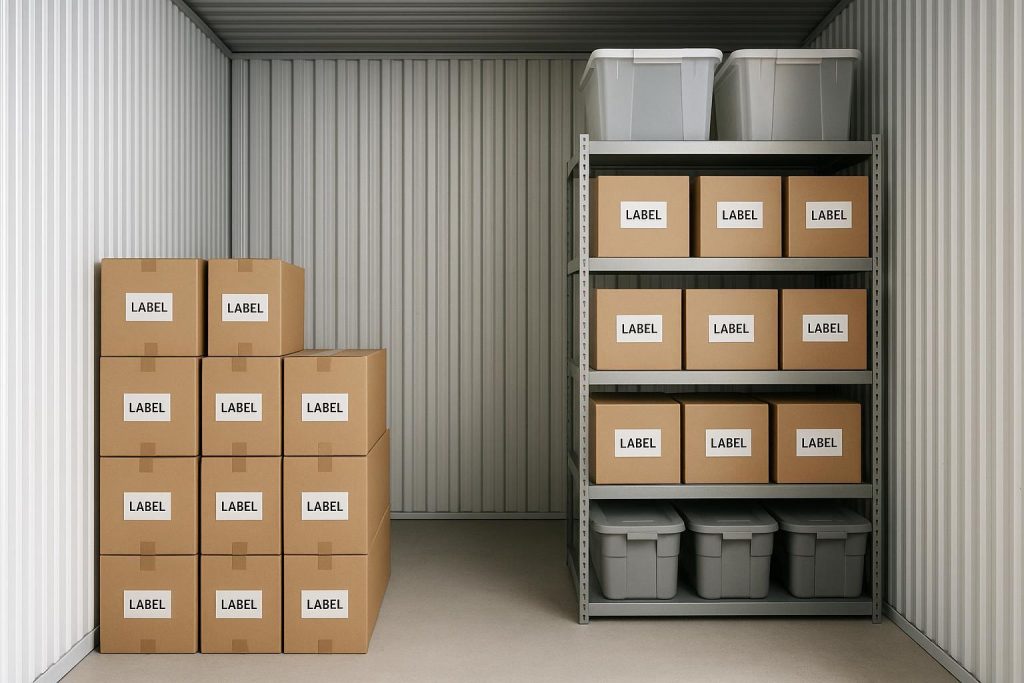
- Label sides and tops of boxes: Use a thick marker to mark the contents on multiple sides and on the top so you can easily read labels, even if boxes are stacked or turned.
- Keep a master list: Maintain a notebook or digital file that lists what’s in each box. This can be as simple as “Box #1 – Kitchen Items” or as detailed as “Box #1 – Drinking glasses, plates, bowls.”
- Color-coding: Color-coded stickers or labels can help you quickly identify categories like “Seasonal Decor” or “Office Supplies.”
6. Plan Your Storage Layout
A little planning goes a long way when you’re cramming boxes, furniture, and odd-shaped items into a storage unit or container. Consider how long certain items will remain in storage and which might need occasional access. Here are some layout tips:
- Allow walkways: If space permits, create a small path so you can reach boxes without having to unload the entire unit.
- Place belongings you’ll need sooner in front: Items such as important documents, seasonal clothing, or special tools might be needed at unexpected times, so keep them accessible.
- Heavier boxes on the bottom: Put broader, heavier boxes at ground level to avoid crushing lighter items beneath them.
- Elevate valuables or electronics: When storing electronics or other sensitive items, keep them away from the floor or stacked near heavy objects to avoid accidental damage.
7. Determine Which Storage Option Is Right for You
Long-term storage means different things depending on what you’re storing and where you’ll keep it. Below are a few approaches to consider:
- On-Site Self-Storage: Self-storage bays can be a convenient, secure solution. If you’re near Edmonton or a similar area, you might look for options like Self Storage units that offer a gated and well-monitored facility. A reliable local company that values straightforward pricing and no hidden fees can make a big difference in your overall experience.
- Mobile Storage Containers: If you prefer the flexibility of loading or unloading items at your own pace, a Mobile Storage container may be ideal. A container is delivered to your location, so you can pack on your schedule without renting a moving truck or making multiple trips.
- Container Rentals on Your Property: A Container Rental can give you more space for large tools, equipment, or furniture. Wind- and water-tight steel containers provide a safe and durable environment for your belongings. Because it’s delivered to your property, you can have everyday access without leaving your home or worksite.
Each option has its pros and cons, so evaluate how much control and access you need. If you’re someone who wants a quick and convenient way to get to your items, container delivery might be the way to go. If you prefer an off-site, secure facility, self-storage bays might be best.
8. Protect Fragile and Valuable Items Extra Carefully
Some possessions need special treatment, especially if they’re breakable or hold sentimental value. The last thing you want is a cracked family heirloom or damaged photo album. Here’s how to give delicate items the care they need:
- Wrap glass in bubble wrap: Layer fragile items and use cardboard dividers. Consult your inventory list so you remember exactly which box holds glass items.
- Store electronics in original boxes if possible: The best protection often comes from packaging the manufacturer designed. If you don’t have that, use snug boxes, foam, or anti-static wraps.
- Separate small valuables: Jewelry, coins, or collectibles might be safer in smaller, clearly labeled boxes or specialized storage containers.
- Use soft padding: Blankets or towels can serve as extra cushioning to fill empty space in boxes.
9. Consider Special Treatment for Long-Term Appliance Storage
Major appliances like refrigerators, washing machines, or stoves require extra attention before storage. Leftover water can lead to mold, and unsealed doors can lead to odors or damage. Here’s what to do:
- Defrost and clean: Thoroughly defrost freezers and fridges, then wipe them dry.
- Leave doors slightly ajar: This step prevents trapped odors and mold from building up. To keep doors from fully closing, insert a towel or wedge.
- Secure loose parts: Remove and wrap glass shelves or loose drawers, then clearly label them for reassembly.
10. Regularly Inspect Your Storage
Although the idea of long-term storage suggests you’ll be leaving items untouched for a while, it’s still prudent to check on them periodically. Depending on your schedule, you might inspect every few weeks or months to ensure everything remains dry, pest-free, and secure. This short visit can catch problems early—like an unexpected leak or an issue with how boxes are stacked.
11. Keep an Organized Documentation System
Storing items for months (or even years) can lead to forgetting exactly what you have and where it’s located. A well-organized documentation system helps you stay in control:
- Digital photos: Take a quick snapshot of the box contents right before sealing it. Save those photos in a labeled folder on your phone or computer.
- Spreadsheet tracking: For long-term or more complex storage needs, a spreadsheet can note box numbers, categories, and approximate values.
- Paper copy of inventory: Sometimes, old-school methods are best. Keep a paper inventory taped inside your storage unit or container for easy reference.
12. Think Ahead for Seasonal Items
Long-term storage often includes seasonal gear—such as holiday decorations, sporting equipment, or outdoor furniture—that you only need part of the year. You can better manage these items by:
- Rotating boxes: When you retrieve one set of items (like winter gear), place out-of-season items (like summer tools) into storage at the front for easy access next time.
- Sealing things well: Items like camping gear and patio cushions can develop musty smells if not completely dry before storing.
- Utilizing color-coding: A bright label or sticker that says “Seasonal” makes it easy to locate off-season belongings when it’s time to switch.
13. Evaluate Long-Term vs. Temporary Solutions
If you’re unsure how lengthy your storage needs might be, start with a short-term plan but keep an eye on expanded options. For instance, if you suspect you’ll need more than a few months, you might want to book a container for a longer duration or utilize a dedicated self-storage unit. Knowing your needs can guide you toward permanent or temporary solutions that align with your life or business plans.
14. Stay Safe While Loading and Unloading
It can be easy to forget about personal safety in the hustle of moving items to and from storage. Keep these pointers in mind:
- Lifting technique: Bend your knees, not your back, and use carts or dollies for heavier boxes.
- Use team lifting: If an item is too heavy or awkward, ask a friend or relative to help.
- Consider professional moving help: For very large or fragile belongings, a professional mover might prevent personal strain and potential damage.
15. Final Touches and Peace of Mind
Once you’ve packed, labeled, and organized your space, take a moment to do a final walkthrough. Double-check that every box is sealed, items are elevated away from damp floors, and nothing is precariously stacked. A last look can pinpoint small oversights—like a forgotten bag of screws or a half-sealed box—that might cause problems later.
Proper preparation is key to enjoying peace of mind when you can’t keep items at home or in the office. Long-term storage doesn’t have to be complicated or stressful. In fact, with the right approach, you’ll quickly find it’s a secure, straightforward way to hang onto what matters while freeing up valuable space in your day-to-day life.
Once you’re ready to retrieve your belongings, you’ll be glad you spent the extra time cleaning, packing, labeling, and choosing the best storage option. Everything will be in good condition and easy to locate. Whether you opt for a Self Storage unit, rent a Container, or go with a Mobile Storage solution, the goal is always a hassle-free experience that gives you total control over your items. By following these practical tips, you’ll find long-term storage can be a flexible and trusted solution for safeguarding possessions you’re not ready to part with—no matter how long they need to stay tucked away.


