Essential Guidelines for Keeping Certain Items Out of Storage
Storing belongings in a self-storage unit can be a practical way to free up space at home, in the office, or on a job site. Whether it’s furniture during a renovation or tools for a business, storage units offer flexibility and peace of mind. Yet, not every item is suitable to be locked away for weeks, months, or years. Some objects degrade, pose safety hazards, attract pests, or require specialized conditions that a typical unit simply can’t provide.
In the sections below, we’ll examine which items should not be stored in a unit, why that’s the case, and what specific considerations to keep in mind. You will also find alternatives for those tricky items so you can make the most of your storage experience while protecting your belongings, your health, and your wallet.
Why Certain Items Pose a Problem in Storage Units
Many people assume that a storage unit is just another room. In reality, these units occasionally face more varied temperature and humidity conditions than a home (particularly if the space is exposed to fluctuating weather). Some items can be harmed or can cause harm when stored for the long term. Hazards include chemical leaks, pest infestations, and even health risks if someone attempts to store living things. For these reasons, most storage facilities have a list of prohibited objects.
1. Perishable Goods and Organic Materials
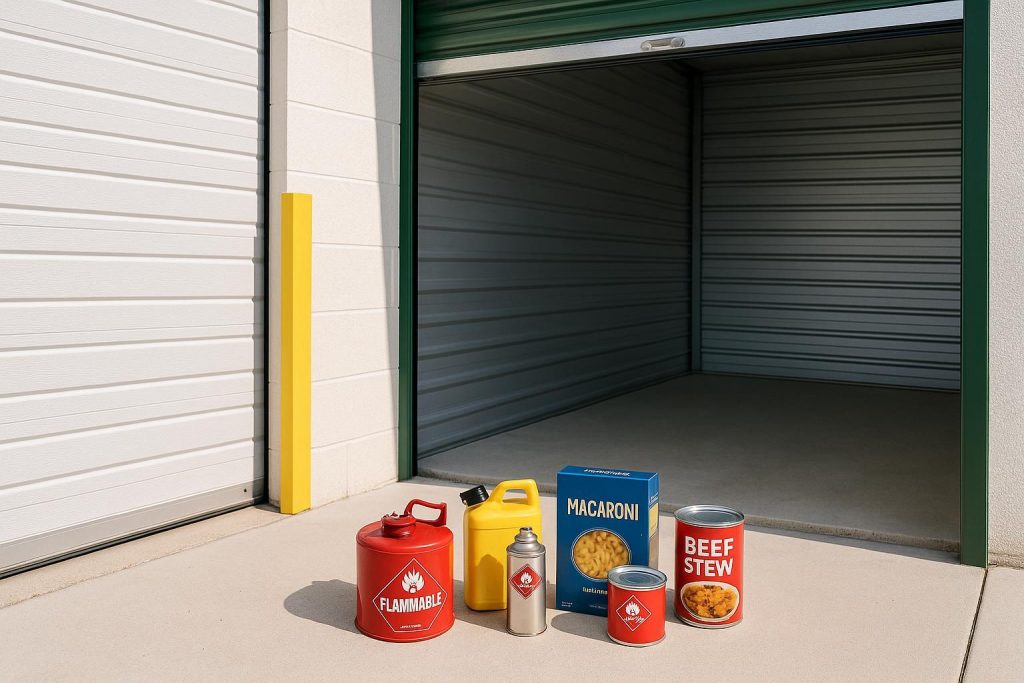
One of the most commonly overlooked restrictions is on perishable foods. Anything that is likely to spoil, rot, or go stale (such as produce, meat, dairy, or leftover meals) should never be kept in a storage unit. Even sealed or canned goods can eventually degrade, leading to unpleasant odors or, worse, harmful bacteria like botulism. The same goes for pet food, birdseed, or any organic material that might attract rodents or insects. The presence of pests can cause damage not only to your belongings but also to those of neighboring storage customers. If you need a space for overflow groceries or are planning seasonal stocking, consider alternative options that keep your food in a proper environment and safeguard others’ units.
Organic debris like grass clippings, soil, or untreated wood scraps can also cause trouble. They stay damp, mold easily, and draw in bugs. While it might be tempting to stash leftover fertilizers or gardening supplies, do your best to store them in well-sealed containers at home or in a dedicated shed. Storage units are meant for stable, non-perishable possessions, not compost materials.
2. Hazardous Materials and Flammable Products
Commercially sold cleaners, paint thinners, motor oil, or fertilizers may seem harmless, but they can become volatile over time. Temperature changes can cause these chemicals to break down and release fumes or even leak. The containers can degrade or fail, increasing the risk of accidents. This situation becomes far more dangerous when multiple people store similar items in one facility.
Flammable substances—like gasoline, propane, kerosene, or fireworks—pose an immediate risk of fire or explosion. Most storage operators strictly prohibit any substance with a “flammable” or “combustible” label. This rule also applies to ammunition, gunpowder, and certain types of batteries that can leak or explode under the wrong conditions. If storing equipment that uses fuel, be sure to drain the tank completely before placing it in a unit.
Batteries in Storage
When it comes to batteries—whether for vehicles, electronics, or power tools—long-term storage requires extra caution. Corroded batteries can leak acid, damaging items and creating a chemical hazard. If you must store a battery, ensure it is removed from devices, inspected for damage, and kept in a dry, secure container. Avoid stacking multiple loose batteries on top of each other, since accidental contact can lead to sparks or surges.
3. High-Value or Irreplaceable Items
While many storage facilities, including local ones in Edmonton or surrounding areas like Spruce Grove and Sherwood Park, are generally safe and secure, it’s wise to be cautious with valuables. Sentimental heirlooms, rare collectibles, important family jewelry, and sensitive legal documents could be at risk. Even a trustworthy facility with locks and cameras isn’t always the best place for clearly irreplaceable items. Certain storage units also lack the environmental controls you might need to preserve fragile antique pieces or unique memorabilia.
If you must store valuables, be sure to pack them with proper cushioning and use an airtight container whenever possible. Also, confirm that your insurance covers items held off-site. Some individuals prefer keeping their prized or meaningful pieces in a safety deposit box, a specialized secure vault, or at-home in a locked, climate-stable area. For those seeking an alternative way to maintain control over their valuables, mobile storage could be an option, since it allows people to keep a locked container on their own property.
4. Living Things (or Recently Living)
It’s never acceptable to store animals or plants in any unit. Pets left in containers, even with food and water, face inevitable suffering and health risks. Storage operators often discover attempts to house animals long after it’s too late to intervene. Similarly, plants cannot get the sunlight, ventilation, and watering they need—leading to decay and infestation. Storage units are designed for static, non-living items, so keep all living things outside this environment.
Unfortunately, some may think it’s all right to place seeds or bulbs in their space, but seeds can also attract pests. If you want to store large amounts of gardening supplies or organic materials, consider well-sealed solutions such as container rentals. You could keep the container on your property to maintain better oversight of temperature and overall conditions.
5. Items Requiring Specialized Conditions
Not all storage units are created equal. Many people incorrectly assume that ordinary units can handle items like fine art, musical instruments, antique wooden furniture, or sophisticated devices that require consistent humidity or temperature. If an item is sensitive to extreme temperature swings or excess moisture, storing it in a typical unit for months might degrade it. Wooden instruments can warp, and electronics can malfunction after repeated exposure to freezing temperatures or excessive heat.
While you might protect electronics by removing their batteries or wrapping them in moisture-resistant materials, there’s still some risk of damage over time if the environment fluctuates too much. The same goes for cameras, audio equipment, or large appliances that contain electronics. Check the product guidelines or manufacturer recommendations. If an item specifically indicates a stable climate range, you may need to find specialized storage solutions. Be sure to protect your essential devices by cleaning and thoroughly drying them before storage. A sealed plastic bin or specialized crate can also help maintain dryness. However, for truly sensitive electronics, it’s a good idea to find more suitable locations that provide stable conditions.
6. Medication and Medical Supplies
Storing medication in a unit is often unwise because many pharmaceuticals lose potency or become unsafe over time if they’re kept in conditions that are too hot, too cold, or too humid. Expired medicines can be harmful, and temperature fluctuations may reduce effectiveness well before the expiration date. Syringes or other medical supplies may also degrade or pose risks if they’re exposed to unsanitary conditions. Unexpected leaks or pest infestations could contaminate them, rendering them unusable. It’s best to discard expired medications properly or keep in-home any medical supplies you rely on.
7. Weapons, Ammunition, and Explosives
Firearms carry both legal and ethical considerations when it comes to storage. Keeping an unloaded firearm locked in a designated safe is usually a better step than storing it in a unit that may not have the right security measures. Ammunition and explosives are especially dangerous. Fluctuations in temperature or accidental mishandling can lead to catastrophic outcomes. Many storage providers strictly prohibit firearms or explosives outright. If you have a collection or inherited guns, check with local laws and, if necessary, look for specialized firearm storage or rely on a licensed dealer’s services. The same goes for fireworks and other celebratory explosives, which should be kept in a safe, approved location, or used responsibly rather than stored indefinitely.
Potential Hazards of Long-Term Storage
Even if the items you place in storage don’t appear immediately threatening, they can become problematic after long periods. Batteries might corrode, cleaning agents might degrade, paint may start leaking toxic fumes, or older electronics could suffer from software and hardware issues. Medication that’s left too long can become ineffective. Keeping track of expiration dates and condition checks is crucial if you plan to store any items for extended periods.
In warmer seasons, rising temperatures can wreak havoc on adhesives, chemicals, plastics, and certain building materials. During winter, freezing temperatures can cause liquids to expand or containers to crack. All these factors underscore the importance of carefully considering what you place in storage and for how long.
Safe Alternatives for Tricky Items
- Valuable Papers & Documents: If you can’t keep them at home, consider a safe deposit box or validated document storage services. For business records, you might look into specialized off-site archives that provide secure, stable conditions.
- Plants & Garden Supplies: Store them in a temperature-appropriate area such as a greenhouse, garage, or shed. If you require larger on-site storage, think about renting a mobile container (if suitable) so you can maintain the correct environment more easily.
- Hazardous Materials: Items like paint, gasoline, or cleaning supplies are best kept in well-ventilated environments that meet local regulations. Some communities have facilities that safely handle toxic or hazardous waste—check your local guidelines.
- Heirlooms & Collectibles: Preserve them in secure containers at your residence, or use specialized, insured storage solutions that cater to particular environmental needs. If you’re short on space, speak with a reputable facility about advanced protection. Just ensure you weigh the costs against the item’s value—either sentimental or monetary.
In short, the best storage approach depends on each item’s needs. A bit of planning can save you plenty of trouble later on.
Working With Storage Providers & Assessing Your Needs
Before transferring boxes or furniture into a unit, talk to your storage provider about any unique requirements. Most reputable facilities have guidelines spelled out on their website or in a brochure. If you’re still unsure, ask questions. Remember that these policies exist not just to protect the facility’s insurance interests but to shield you, your neighbors, and the employees from potential harm or liability.
If you’re located in Western Canada and need specialized storage options, Yellowhead Storage offers a range of services. From self-storage units to container rentals and mobile storage, there are solutions that can help you store items safely on-site or at a secure facility. Asking about security measures, known temperature fluxes, and size options can help you decide which service meets your needs.
Common Mistakes When Deciding What to Store
- Assuming All Units Are the Same: Some are more weatherproof than others. Understand the conditions and structure of your unit to prevent unfortunate surprises.
- Skipping the Labeling Process: Even if an item seems harmless now, it can be dangerous if you forget what it’s made of a year from today. Label boxes with their contents, especially if they hold any chemicals or adhesives.
- Not Checking Expiration Dates: Medications, food items, and certain household chemicals have distinct shelf lives. Long-term storage can easily extend them far beyond safe usage.
- Storing on the Floor Without Protection: Leaks, floods, or condensation can ruin boxes kept directly on the ground. Use pallets, shelving, or protective plastic bins.
- Ignoring Facility Rules: Reputable storage companies outline what you can or can’t store. Violations could lead to eviction from the facility—or worse, cause real danger for you and others.
A Final Word on Responsible Storage
Storing belongings responsibly begins with knowing which items are off-limits. Perishables, hazardous materials, living things, and high-value items all require special care. Sticking to a facility’s guidelines helps ensure safety, reduces the risk of damage, and keeps everyone’s possessions in good condition. Whether you need container sales for an ongoing project or a straightforward self-storage unit, make it a point to ask questions and follow best practices. Doing so preserves both the space and your peace of mind.
Above all, remember that these restrictions aren’t meant to inconvenience you, but to provide safer, cleaner, and more efficient service for everyone involved. By understanding these guidelines, you’ll protect your own goods and the goods of fellow storage users—ensuring that your items stay secure whenever you need extra space.


