Effective Ways to Store Your Business Inventory in a Self-Storage Unit
Running a business often means juggling a variety of tasks and responsibilities. One of those tasks is figuring out where to store surplus products, tools, or files. If you find yourself outgrowing your garage, office storeroom, or even your primary workspace, self-storage can be a practical option. This approach helps you maintain a more organized environment without the overhead cost of leasing a larger commercial space. Whether you manage a small local shop or you’re a contractor juggling project materials, a self-storage unit can keep your business inventory in order.
Why Consider Self-Storage for Your Business
Many small and medium-sized businesses struggle with limited space. Retailers might need a place to store seasonal products, and service providers may have extra materials or machinery that they only use certain times of the year. Rather than renting a costly warehouse or expanding your storefront, a self-storage unit can serve as a secure, cost-effective solution. With flexible options for short-term or long-term usage, you can rent the space you need for as long as you need it. There are no hidden fees with reputable providers, and it can often be more budget-friendly than upgrading to a bigger business facility.
In the Edmonton area, for example, local businesses sometimes need to house specialized equipment that must stay secure when it’s not in use. Rather than letting tools occupy precious workspace, or hauling them around day to day, placing them in a self-storage unit allows for easy access while still freeing up room on-site. Self-storage can also be a solution for entrepreneurs who operate out of their homes but require a dedicated area for extra inventory. This arrangement can keep living and working spaces clutter-free, improving overall organization and professional presentation.
Benefits of Self-Storage for Inventory Management
There are several key benefits of using self-storage for your business:
- Scalability: Lease more or less space depending on demand, product cycles, or business growth. If you need to upscale your inventory ahead of the holiday season, renting a larger storage unit can be easier than moving to a bigger commercial location.
- Security: Many storage facilities, such as Yellowhead Storage in Edmonton, offer gated entrances, surveillance cameras, and sturdy, weather-resistant units. This helps you keep your valuables and business assets secure.
- Organization: A dedicated area for business items reduces clutter at your primary workspace, which helps improve efficiency. Staff can use the self-storage unit to access inventory or supplies in a structured, streamlined way.
- Cost-Effectiveness: Self-storage often has a lower monthly cost than renting an entire warehouse or extending your existing space. You only pay for the storage capacity you need, helping you manage finances more responsibly.
- Convenience: Self-storage units are typically designed for easy load-in and load-out operations, including wide access pathways and drive-up options. This makes picking up or dropping off stock simpler, saving valuable time.
Planning and Preparing Your Inventory
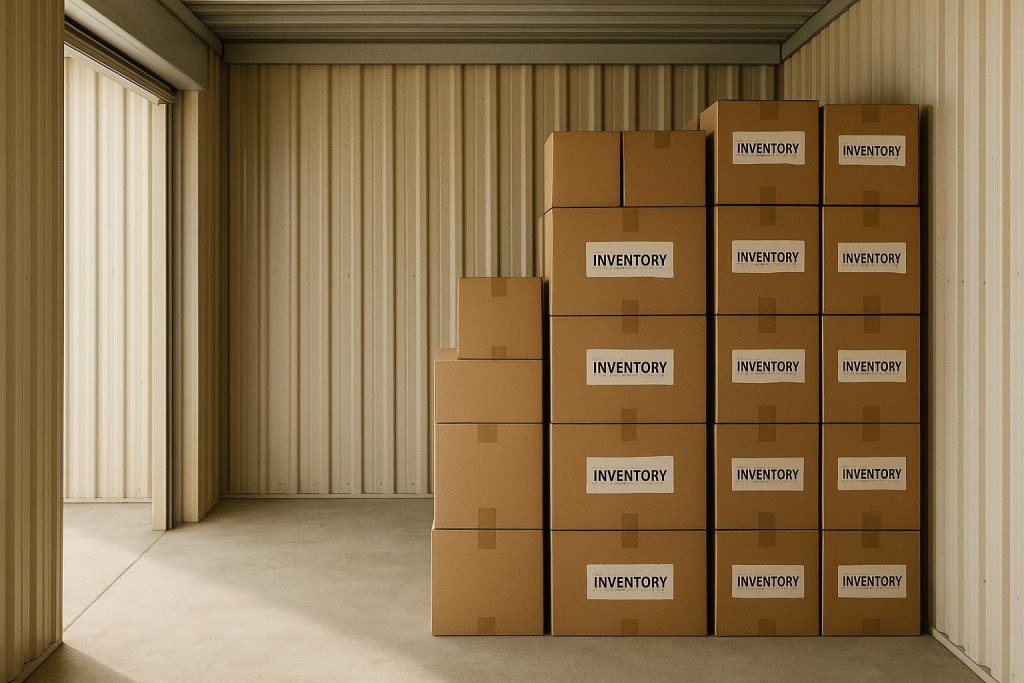
A thoughtful storage plan can save you headaches down the line. Begin by creating an inventory list. It can be as simple as a spreadsheet—what products you have, how many items, and their estimated value. Label your boxes clearly with details such as product names, dates, and categories. This labeling system simplifies locating a specific product or item when you need it. It also helps you keep an accurate stock count, so you know when it’s time to reorder. Clear labeling is especially beneficial for businesses that deal with diverse SKUs or multiple product lines.
Next, measure and allocate the right amount of space. Overcrowding a small unit wastes your time and can damage delicate items. If you have oversized tools or heavy machinery, ensure there’s enough room to maneuver. For retailers, think about how frequently you’ll rotate products. You might want a layout that keeps the fastest-moving items near the front. Planning ahead allows you to set up practical shelving units and walkways, making routine site visits much more efficient.
Finally, consider your budgeting. While a self-storage unit is often more economical than other expansion methods, it’s still good to double check how this expense fits into your monthly or quarterly costs. Keep in mind that renting a slightly bigger space than you absolutely need might serve you better in the long run. It provides room for growth and prevents congestion, which can become a hindrance if your business experiences a sudden surge.
Best Practices for Storing Business Inventory
Once your items are inside the self-storage unit, you’ll want to maintain good long-term organization. Follow these best practices:
- Use Shelving: Installing free-standing shelves or racks can help you maximize vertical space. This also keeps items off the floor, reducing the risk of damage if there’s dust or moisture.
- Group Similar Items: Arrange products in categories. If you have multiple product lines, dedicate separate shelves for each line. Keeping similar items together makes it faster to locate stock when fulfilling orders.
- Aisle Space: Leave enough space for an aisle or walkway. This allows you to access boxes in the back without having to move everything around.
- Regular Checks: Make a habit of visiting your unit regularly to inspect and rotate stock if needed, especially for items with expiration dates. This helps ensure that your stored items remain in good condition.
For delicate or high-value items, consider protective materials such as bubble wrap or specialized packaging supplies. While some self-storage providers in the market emphasize climate-controlled units, it’s also possible to store many types of business inventory in a standard unit by arranging them properly. Just take extra steps to protect anything vulnerable to temperature or humidity shifts.
Self-Storage vs. Shipping Container Rentals
If you need more flexibility or prefer to keep your inventory on-site, another option to explore is container rentals. A container remains on your property, giving you immediate access to business supplies or materials right where you need them. Many entrepreneurs who operate in fields like construction or agriculture find this local solution immensely useful, since it saves transit time and simplifies day-to-day logistics.
Self-storage, on the other hand, is perfect if you want secure, off-site protection for important items. Off-site units may offer additional perks, such as 24/7 monitoring within a gated facility. If you’re deciding between the two, your choice will hinge on your space availability, accessibility needs, and budget considerations. Both self-storage and container rentals can serve as trusted, practical solutions. It’s worth comparing the trade-offs based on how often you need to retrieve items and whether you want round-the-clock supervision for your materials.
Security Measures and Peace of Mind
One of the top concerns for any business storing inventory is security. You want to be sure that every item is safe and stays in good shape for as long as it’s in storage. Most reputable storage facilities have surveillance cameras, gated access, and durable units that are wind- and water-tight. If you’re storing at a central location like self-storage bays, you’ll likely benefit from on-site staff, additional lighting, and strict facility policies that limit who can access the premises.
When your livelihood relies on products being in sellable condition, the peace of mind that professional security measures bring can be invaluable. Regular on-site visits can help you monitor stock conditions. If you operate during typical business hours, you can time your stock checks to coincide with the facility’s hours of operation, ensuring a smooth process. Some businesses even coordinate deliveries straight to their storage unit, eliminating additional steps in the supply chain.
Packing and Organizing for Efficiency
Well-organized storage is about more than just moving boxes off the floor. It’s about setting up an efficient system that replicates—or even surpasses—what you’d achieve in a typical warehouse. Start with sturdy boxes that can withstand repeated handling. Use pallets or shelving to create different zones for different product categories. You might create a “rapid pull” zone for items you frequently retrieve, while seldom-requested items can remain in labeled boxes further back.
If you transfer inventory frequently, you may also consider color-coded labels. For instance, red labels for urgent or high-value inventory, blue for seasonal items, and green for items you may only need once or twice a year. This color system acts as a visual cue, speeding up your visits to the unit. Keep essential packing materials, like tape or bubble wrap, in a clearly marked bin so you don’t waste time searching for them. The idea is to maintain the same organizational discipline in your self-storage unit as you would in your workplace.
Reducing Overhead and Improving Efficiency
Before renting a larger storefront or committing to a commercial warehouse lease, storing business inventory in a self-storage unit provides a welcome middle ground. It can help your business stay lean, especially if you have seasonal spikes or cyclical demand. You only pay for the space you need, and you can typically expand or downsize without a long-term commitment. This level of flexibility can also help businesses experiment with carrying new product lines. If you decide a product isn’t as popular as you hoped, you can easily reconfigure your space.
Additionally, moving less critical inventory off-site might free up room at your primary location for higher-margin activities, such as product displays, a showroom, or additional working areas. For entrepreneurial start-ups, saving on monthly costs is key to staying profitable, and self-storage units can align with that goal. You can also keep your workspace clutter-free, which is especially important if you hold client meetings at your office. Having a neat, organized environment makes a great impression, reinforcing trust and a sense of professionalism.
Choosing the Right Self-Storage Provider
As you explore self-storage solutions, look for providers who offer simple, honest service. No hidden fees, no complicated contracts. You should be able to get clear pricing, a straightforward explanation of unit sizes, and genuinely helpful guidance from staff. Trusted facilities often exist in convenient locations, allowing you to reach your inventory quickly when required. If you serve places like St. Albert, Spruce Grove, or Sherwood Park, a location in or near Edmonton may be ideal. This positioning means minimal travel time when you need to access or move your items.
Check if the facility has adequate gate hours that match your schedule, especially if you often pick up or deliver products outside typical business hours. Some storage companies even provide additional services like mailbox rentals or assistance with moving. While those extra features might not be crucial to every business, they can streamline your overall workflow if you need them. Ultimately, find a place that meets your most pressing needs—enough square footage, sturdy protection, sensible pricing, and a team that supports you with honesty and reliability.
Final Thoughts
Storing business inventory in a self-storage unit lets you increase efficiency, reduce clutter at your main location, and better manage your resources. It’s a flexible, practical choice for growing businesses, pop-up shops, or even well-established enterprises that need additional storage from time to time. By organizing your stock, planning ahead, and choosing the right facility, you can keep your operations running smoothly while safeguarding your goods.
Whether your business is a brick-and-mortar retail shop, an online operation shipping products across the province, or a construction outfit that needs to protect valuable tools, a self-storage unit can be a trusted ally. For local Edmonton-area businesses, these units can help balance cost and convenience. By following best practices—like clear labeling, smart shelving, and regular check-ins—you’ll ensure your stored inventory is secure, accessible, and ready to go the moment you need it.
In short, self-storage is much more than an overflow solution. It can be a strategic asset for any business seeking to optimize operations. By knowing how to prepare inventory, set up your unit, and pick the right local provider, you’ll find that your daily workflow becomes more organized and less stressful. It’s about embracing the flexibility that self-storage offers, so your business can thrive in both busy and slow seasons, all while keeping costs and logistics under control.


